gplabetoon embroidery

golabetoon embroidery

Introduction to Golabetoon embroidery

Golabetoon embroidery is an art that became popular in Iran many years ago during the Achaemenid period, and after that it spread in neighboring provinces and countries of Iran. The origin of this art can be found in southern cities and provinces such as Shush, Hormozgan or in the center such as Isfahan. This art is one of the most popular Iranian arts among the people of different regions of Iran and other countries. Nowadays, many tourists want to buy clothes and decorative items that are made with the art of low embroidery or Golabetoon. For this purpose, we will further introduce you to the uses and benefits of this art. 

(read more about other types of embroidery here) 

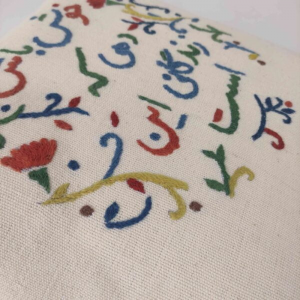
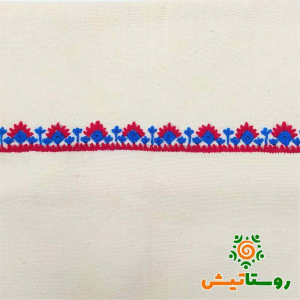
This art is used to decorate various fabrics such as rugs, pillowcases, curtains, bags, and even mantles. In Roostatish, there are various products with Golabetoon Embroidery art, which are sewn by the artist girls of Qeshm villages. embroidered masks and bags are among these products that are designed using local and herbal symbols and signs of the region.

What is Golabetoon doozi?

This art, which is also known by other names such as flower embroidery or kam doozi, is an old art whose beginnings in Iran go back to the Achaemenid period. In different provinces and cities of Iran such as Isfahan, Hormozgan, Bushehr, Shush and Yazd, this art is included in the category of known arts for women. Many local women earn money for themselves or their family members by performing artistic activities such as flower embroidery. If we want to refer to the way of doing this art, we should say that this art is done on traditional and delicate fabrics such as traditional clothes or delicate wedding nets. Usually, these fabrics are decorated with gold, silver, and white color coatings and the final product is sold in the market.

If we want to refer more precisely to Golabetoon, we must say that Golabetoon is a kind of natural thread that is used to sew metal covers and sequins in different colors such as yellow and white. Usually, women artists use this thread to create beautiful designs and patterns such as flowers, slime and symbolic designs. Today, the art of Golabetoon Embroidery is also done on gowns, mantles, chadors, curtains, pillowcases and collars, and it multiplies their beauty.

For the first time, the art of Golabetoon embroidery was created in China about 105 years before the birth of Jesus Christ, and then it was taken from China to Iran and Iran’s neighboring countries (modern India and Pakistan) and spread. After the Achaemenid period (which was the beginning of this art in Iran), this art spread throughout the country.

Archaeologists have found designs and artistic clothes embroidered with flowers dating back several years in Iran. And today this art is exported to the neighboring countries of Iran, Pakistan, Afghanistan and Tajikistan.

Use of hand and thread

All kinds of Golabetoon embroidery:

This art is sewn by hand and thread on a bow or wooden frame by Golabetoon thread. In this way, the artist draws the motif he wants on the fabric and creates his art on the fabric using thread and colored coatings (such as red, gold, silver). Sometimes skilled artists using their skill and elegance use sequins and beads to make this art more beautiful.

This art has many different types. As we mentioned above, this art is also known by names such as the art of low embroidery, embroidery and bow embroidery. In the following, we will introduce you to the different types of this art:

The first art is called Badaleh Doozi.

Badaleh embroidery, which is also known as Talibafi, is one of the arts related to Golabetoon embroidery. The art that is done on southern pants with Golabetoon thread is called Badaleh Doozi. This art is usually used in Hormozgan province to decorate women’s trousers, especially newlyweds. Usually, the price of these pants is much more expensive compared to simple pants. The designs and motifs of these pants are liked by a large group of people.

The second case is to use the art of embroidery directly to decorate different clothes and fabrics.

This art is used directly on clothes, curtains, and prayer rugs. This art is usually used to enhance the beauty of clothes and fabrics that can be given as gifts (such as wedding dresses for newlyweds). This art exists in various designs in different cities of Iran such as Bandar Abbas, Bushehr, and Hormozgan. You can purchase the desired product by viewing the different designs of this art in different cities of Iran.
to buy the best bag of golabetoon open the link below :
https://roostatish.com/product/embroidered-handcrafted-wristlet/

The next type of this art is to use it on parts of clothes such as the collar.

You can use the art of embroidery to connect different parts of clothes such as collar, sleeve, vest or ribbon.


As you have seen, this art exists in various types in our dear country of Iran. For this purpose, you can choose any of them according to your taste and start learning in this field.


Uses of Golabetoon embroidery art in the past

In the past, gold and silver were used for weaving on expensive fabrics. The fabrics that are special for this art include mahout fabrics, wool, silk and velvet fabrics. Of course, even today, these fabrics, especially Hariz fabric, are used together with bows to produce low-embroidery art. This art is usually used in the courts and palaces of Persian sultans and kings to prepare the clothes of princes and kings.

In addition, this art has been used to make pillow covers, prayer rugs and wallets. Since the clothes and accessories made through this art were expensive, not all members of the society could produce these fabrics. Rather, only rich people and high levels of society have had the ability to buy and use this art in their life and for their clothes. ‏‎


Golabetoon embroidery applications in the present time

Today, the art of Golabetoon embroidery is used in the production of Iranian traditional and formal clothes. In addition, Fortunately, today this art has attracted many fans all over the world. This positive point has increased the number of artists who want to learn this art. Dear ones, you can easily produce low-embroidered art products or Golabetoon embroidered products by learning this art and by increasing your skills, and in this way, you can earn money in this way.


What do I need to learn from the art of embroidery?

 it should be said that you need to increase your knowledge about this art and its creation methods. By increasing your knowledge about this art, you can decide rationally whether this art is useful for you or not. After increasing your information, you can consult and talk with artists who are active in this field. In this way, you will get to know more about the principles and process of producing collars or beautiful clothes that are made using this art.

In the end, we hope this article has helped you to learn more about the art of Golabetoon Embroidery.

‍️ Iranian Mythical Dolls: From Legends to Handcrafted Art

‍️ Iranian Mythical Dolls: From Legends to Handcrafted Art

️ Iranian Mythical Dolls: From Legends to Handcrafted Art

Iranian folklore is rich with mythical creatures and legends that have been passed down through generations. Among these, the tales of Melmodas, Mother of the Sea, and Shahmaran stand out. These stories not only captivate the imagination but have also inspired artisans, particularly women in rural communities, to create handcrafted dolls that embody these legendary figures.

Melmodas: The Enchantress of the Sea

Melmodas is a mythical sea creature known for her enchanting beauty and deadly allure. Descriptions portray her as a tall, captivating woman with a sweet fragrance emanating from her, drawing men towards her. However, her lower limbs are said to resemble sickles, and once a man is ensnared by her charm, she uses her sickle-like legs to fatally harm him.

In rural Iranian communities, especially in areas like Turkmen Sahra, women artisans have crafted dolls inspired by Melmodas. These dolls are meticulously handmade, often using felt and other natural materials, capturing the essence of this mythical sea enchantress.

Mother of the Sea: The Benevolent Guardian

The Mother of the Sea is a benevolent mythical figure believed to reside in the depths of the Caspian Sea. She is considered a protector of sailors and fishermen, guiding them safely through treacherous waters. Her presence is often associated with calm seas and bountiful catches.

Artisans in coastal regions of Iran, particularly in Mazandaran, create dolls representing the Mother of the Sea. These dolls are adorned with symbols of the sea, such as fish and waves, and are crafted with materials that reflect the coastal environment, serving as both protective charms and artistic expressions of the legend.

Shahmaran: The Queen of Snakes

Shahmaran is a legendary creature with the upper body of a woman and the lower body of a snake. She is revered for her wisdom and healing abilities. The most famous tale involves a young man named Jamasp, who discovers Shahmaran living in a subterranean palace. When the king falls ill, Jamasp is forced to reveal Shahmaran’s existence, leading to her tragic death. However, her wisdom endures, and she is remembered as a symbol of knowledge and sacrifice.

In regions like Khorasan, women artisans have created dolls inspired by Shahmaran. These dolls often feature intricate designs that highlight her dual nature, combining human and serpent elements, and are crafted using traditional techniques passed down through generations.

The Art of Doll-Making in Rural Iran

In rural Iranian communities, the tradition of doll-making is more than just a craft; it is a means of preserving and transmitting cultural narratives. Women artisans, often working within the confines of their homes, use locally sourced materials such as felt, wool, and clay to create dolls that represent various mythical figures.

These handcrafted dolls serve multiple purposes: they are educational tools for children, decorative items for homes, and tangible representations of the rich tapestry of Iranian folklore. The process of creating these dolls involves intricate techniques and a deep understanding of the stories they represent, ensuring that each doll is a unique embodiment of the legend it portrays.

Shahmaran: The Legendary Serpent Goddess and Her Inspiring Legacy

Shahmaran: The Legendary Serpent Goddess and Her Inspiring Legacy

Shahmaran: The Legendary Serpent Goddess and Her Inspiring Legacy

Introduction

Deeply rooted in Kurdish, Iranian, and Middle Eastern folklore, Shahmaran is a mythical creature celebrated for her wisdom, mystical powers, and profound connection to nature. Her name translates to “King of the Snakes”, reflecting her dominion over serpents. Shahmaran is depicted as half woman, half snake, symbolizing fertility, life, and the secrets of the natural world.

In addition to her spiritual and cultural significance, Shahmaran is renowned as the goddess of wisdom and medicinal knowledge, particularly in the use of herbs and natural remedies. Her story has inspired artists, storytellers, and craft makers for generations.

The Legend of Shahmaran

The most famous tale centers on a young man named Jamasp (or Tasmasp in some versions). One day, while searching for honey, he accidentally discovers a hidden cave. Deep inside, he finds a magical chamber inhabited by Shahmaran and thousands of snakes.

Over time, Jamasp be friends Shahmaran. She teaches him about medicinal herbs, secret remedies, and the deeper wisdom of the natural world. Through her guidance, Jamasp learns to heal the sick and understand the balance between humans and nature.

Eventually, Jamasp longs to return to the surface. Before leaving, Shahmaran warns him to keep her existence a secret. But when the king falls gravely ill, his vizier discovers that the cure lies in Shahmaran’s flesh. Forced to reveal her location, Jamasp follows her instructions carefully: the flesh is cooked, and only the second serving is to be eaten by the king. The vizier, who drinks first, dies, while the king is cured. Jamasp inherits Shahmaran’s wisdom and becomes renowned as a healer and wise man.

Shahmaran: The Legendary Serpent Goddess and Her Inspiring Legacy

Symbolism and Cultural Significance

Shahmaran’s story carries deep symbolic meanings:

  • Wisdom and Knowledge: She embodies the acquisition of hidden knowledge, including secrets of medicinal herbs and the natural world.
  • Fertility and Life: Her dual human-snake form symbolizes the cycles of life, nature, and regeneration.
  • Trust and Betrayal: The narrative teaches lessons about responsibility, secrecy, and the consequences of broken trust.
  • Protection and Blessings: In Kurdish culture, Shahmaran is revered as a mother goddess, and her image is used in art, textiles, and home decor to bring protection, especially to women and children.

Shahmaran-Inspired Handcrafted Products at Rostatish
At Rostatish, we celebrate Shahmaran’s enduring legacy through handcrafted, folklore-inspired products that bring her wisdom and beauty into your home. Our collection includes:

  • Legendary Dolls: Shahmaran dolls capturing the mythical and mystical essence of this serpent goddess, perfect for collectors and cultural enthusiasts.
  • Cushions and Pillows: Embroidered with motifs inspired by Kurdish folklore, symbolizing wisdom, protection, and creativity.
  • Table Runners and Linens: Featuring intricate designs that tell the story of Shahmaran and the rich heritage of Iran.
  • Bags and Accessories: Handmade items combining traditional craftsmanship with modern usability, inspired by ancient symbolism.

Each item is a tribute to Shahmaran as a goddess of wisdom and medicinal knowledge, allowing her story to live on in your everyday life. From mythical dolls to folk art-inspired home decor, these products celebrate the beauty and depth of Kurdish and Persian traditions.

Shahmaran: The Legendary Serpent Goddess and Her Inspiring Legacy

Why Shahmaran Inspires Us

Shahmaran is more than a character in folklore—she represents:

  • The power of learning from nature
  • The preservation of traditional knowledge of medicinal herbs
  • Creativity and imagination in storytelling and craft
  • The connection between myth and everyday life through home decor

By incorporating Shahmaran-inspired products into your home, you honor this legendary serpent goddess and her role as an enduring symbol of wisdom, healing, and cultural heritage.

Shahmaran: The Legendary Serpent Goddess and Her Inspiring Legacy
Faceless Folk Dolls of Iran: Philosophy, Types, and Cultural Roots

Faceless Folk Dolls of Iran: Philosophy, Types, and Cultural Roots

Faceless Folk Dolls of Iran: Philosophy, Types, and Cultural Roots

Across many regions of Iran, some traditional dolls are intentionally made without faces. This choice is not accidental; it reflects deep cultural, religious, and symbolic beliefs. In this article, we will explore the different types of faceless dolls in Iran, the reasons behind their design, and the philosophy that makes this tradition unique. By focusing on keywords like faceless dolls Iran and Iranian faceless dolls, we also shed light on an important aspect of Iran’s intangible cultural heritage.

  1. Qorchoq (Turkmen Faceless Doll)

One of the most recognized Iranian faceless dolls is the Turkmen “Qorchoq.” This doll has no facial features at all. Why? According to Turkmen beliefs, perfect creation belongs only to God, and humans should not interfere with divine design. Therefore, the doll is intentionally left incomplete—without a face—as a symbol of respect for divine creation.

Made from wood, fabric, and buttons, the Qorchoq often carries cultural signs of Turkmen identity. For example, a scarf or a ring might symbolize whether the doll represents a married woman.

  1. Aroosk or Aroos (Ghaleh Ghafeh, Golestan)

In the village of Ghaleh Ghafeh, locals make a doll called “Aroosk” or “Aroos.” It is always faceless. The reason lies in the belief that the creator’s personality unconsciously influences the doll’s appearance. By keeping the doll faceless, the identity of the maker remains hidden.

These dolls usually wear three scarves (mandil) on the head, reflecting the colorful clothing of the local women.

  1. Dohtolok (Qeshm Island, Hormozgan)

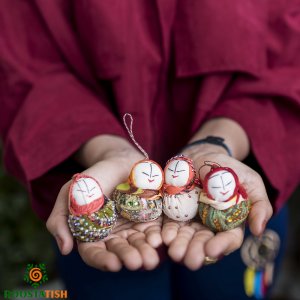
The Dohtolok, whose name means “little girl” in the local dialect, is a very small faceless doll made from colorful fabrics of the region. The philosophy of facelessness here is the same as the Turkmen view: only God creates complete beings, and human hands should avoid giving full human features.

  1. Bigak Lili (Handijani Doll – Southern Iran)

Found in southern and western provinces such as Khuzestan, Bushehr, Fars, Lorestan, Kerman, and Sistan-Baluchistan, the Bigak Lili is a faceless moving doll. The lack of a face allows children to use their imagination freely, assigning emotions and stories to the doll on their own.


  1. Lilik and Domaik (Mahshahr, Khuzestan)

These faceless dolls resemble a bride and groom. Instead of facial features, a cross-shaped stitch is sewn on their faces. The cross is a symbol of the sun, ancient Mithraism, and blessing. Due to Mahshahr’s ethnic diversity, these dolls are also known by different names such as Lilik, Lo’bat, or Bigak.


  1. “Bi” – Ritual Doll of Dezful

In Dezful, a special faceless doll called “Bi” (meaning “bride” in the local dialect) is part of wedding traditions. It is placed in the bride’s room as decoration and often accompanies the bride in her dowry. Symbolically, the Bi doll is considered a silent companion, sharing the bride’s joys and sorrows. This cultural practice highlights the spiritual role of dolls in Iranian rituals.

The Philosophy Behind Faceless Dolls in Iran

The facelessness of these dolls is rooted in several cultural and spiritual principles:

  1. Respect for Divine Creation – Only God can create perfect beings; leaving dolls faceless acknowledges this belief.
  2. Protecting the Maker’s Identity – A faceless doll prevents the artist’s personality from shaping the doll, keeping it neutral.
  3. Encouraging Imagination – With no fixed expression, children invent their own emotions and stories for the doll.
  4. Symbolic Representation – Some faceless dolls carry cultural symbols, such as the sun-cross in Lilik and Domaik, representing fertility and blessing.
  5. Ritual and Emotional Roles – Dolls like the Bi of Dezful serve as spiritual companions, reflecting the deep emotional and symbolic roles dolls play in Iranian life.


Conclusion

The world of faceless Iranian dolls is a fascinating intersection of spirituality, creativity, and cultural tradition. From Turkmen Qorchoq to the Dezfuli Bi, each doll tells a story not through its face, but through its symbolism, clothing, and cultural meaning.

For collectors, researchers, and enthusiasts, these traditional Persian dolls represent more than toys—they are living pieces of Iran’s intangible heritage. By understanding their philosophy, we learn to see beauty not in the details of a face, but in the depth of tradition behind it.

Nomadic Handwoven Treasures of Iran

Nomadic Handwoven Treasures of Iran: Varis-Bafi and Shirdang-Bafi

Nomadic Handwoven Treasures of Iran: Varis-Bafi and Shirdang-Bafi

Introduction

Among the wide range of nomadic handicrafts of Iran, two of the most fascinating weaving techniques are Varis-Bafi (وریس‌بافی) and Shirdang-Bafi (شیردنگ‌بافی). These ancient textile arts are created by Iranian nomadic tribes using simple tools, natural fibers, and centuries-old techniques passed down through generations. Internationally, these weaving styles are often referred to as tablet weaving or card weaving, yet in Iran, they carry unique cultural meanings deeply tied to the daily life and identity of nomads.

These arts are not just decorative; they are functional handwoven products, closely related to the livelihood, rituals, and traditions of Iran’s nomadic communities.


What is Varis-Bafi?

Varis-Bafi is a type of narrow weaving made by Iranian nomads, especially in western and southern regions of Iran. The word Varis refers to the strong woven bands or straps produced in this method.

  • Purpose: These woven straps are mainly used in daily nomadic life — such as for tying loads on pack animals, securing tents, or decorating household equipment.
  • Technique: The weaver uses a set of wooden cards (sometimes square with four holes) and threads passed through them. By rotating the cards, patterns emerge on the strap.
  • Materials: Nomads use sheep wool or goat hair, dyed with natural colors like madder red, indigo blue, or walnut brown.
  • Designs: Geometric motifs, tribal symbols, and zigzag patterns dominate Varis-Bafi, each reflecting the tribe’s identity and cultural background.
Shirdang-Bafi: The Art of Decorative Straps

Shirdang-Bafi is another form of tribal weaving, practiced among nomadic groups in southwestern and central Iran.

  • Function: Unlike Varis-Bafi, which is mostly utilitarian, Shirdang straps are highly decorative. They are used to adorn horse and camel saddles, tent edges, and wedding equipment.
  • Meaning of the Name: “Shirdang” literally means “lion’s tail,” symbolizing strength, protection, and beauty in nomadic culture.
  • Colors and Patterns: These woven straps are colorful, often featuring diamond motifs, triangular shapes, and symbolic lines representing nature, fertility, and spirituality.
  • Cultural Value: Shirdang-Bafi is considered a form of nomadic art, showcasing the creativity of women who weave them during migration seasons.
Tablet Weaving: The Global Connection

What Iranians call Varis-Bafi and Shirdang-Bafi is widely recognized across the world as tablet weaving or card weaving. This ancient craft exists in many cultures — from Viking bands in Scandinavia to medieval straps in Europe. However, the Iranian version is distinguished by its:

  • Use of tribal symbols unique to nomads of Iran
  • Natural wool and eco-friendly dyeing traditions
  • Strong connection to nomadic lifestyle and rituals

This global parallel makes Iranian nomadic weaving highly appealing to collectors, anthropologists, and lovers of handwoven tribal art worldwide.

Cultural and Artistic Significance

Iranian nomadic weavings such as Varis-Bafi and Shirdang-Bafi are more than just crafts. They represent:

  1. Nomadic Identity – Patterns often encode tribal affiliations and social status.
  2. Practical Value – Strong straps for securing loads, reflecting the needs of a migrating lifestyle.
  3. Artistic Expression – Women artisans embed stories, beliefs, and symbols into the woven bands.
  4. Sustainability – Using hand-spun wool and natural dyes, these crafts embody eco-friendly traditions.
Why Collectors and Enthusiasts Value Nomadic Weaving

In recent years, interest in Iranian nomadic handicrafts has grown among collectors, museums, and handmade textile enthusiasts in North America, Europe, and Asia. Varis-Bafi and Shirdang-Bafi attract attention because they combine:

  • Functionality – still usable in modern interiors and fashion accessories
  • Authenticity – each piece is one-of-a-kind, tied to a tribe and artisan
  • Cultural Depth – carrying centuries of Iranian nomadic heritage

They are not only historical but also adaptable to modern design trends, appearing as belts, wall hangings, or decorative trims in contemporary art and fashion.

Conclusion

Varis-Bafi and Shirdang-Bafi are shining examples of Iranian nomadic weaving traditions. More than just tribal handicrafts, they are living artworks that connect us to the resilience, beauty, and creativity of Iran’s nomadic communities.

For those who love handwoven by nomads, exploring these traditional arts is like stepping into a world where utility, symbolism, and artistic imagination meet. Whether you call it tablet weaving, card weaving, or by its Iranian names — Varis and Shirdang — this heritage deserves recognition and preservation as one of the jewels of Iranian nomadic art. you can also find varis product such as glasses strap, bag, belt, in these links below:
1) https://roostatish.com/product/handwoven-cotton-tote-bag-with-nomad-card-woven-strap-sustainable-tribal-inspired-design/
2) https://roostatish.com/product/handwoven-tribal-belt-gozhdin-flower-pattern/
3) https://roostatish.com/product/handwoven-cotton-tote-bag-with-nomad-card-woven-strap-sustainable-tribal-inspired-design/

Know more about natural fiber

Maybe you have heard the term “natural fibers” a lot when buying clothes, towels or any other fabric. But you never knew exactly what materials these fibers are made of and why everyone says it is better to buy natural fiber clothes? Natural fibers are made from fibers taken from plants or animals. Examples of natural fibers include cotton (natural and all-cotton), silk, linen, and wool. On the other hand, synthetic fabrics are produced by humans through a chemical process called polymerization. Apart from economic considerations, the usefulness of fibers for commercial purposes is determined by properties such as length, strength, flexibility, elasticity, wear resistance, absorbency, and various surface properties.

Most textile fibers are narrow, flexible and relatively strong. They have a rubbery state and stretch when stretched and then fully return to their original shape. What is the history of using natural fibers? The use of natural fibers for textile materials began before the recorded date. The oldest indication of the use of fibers was probably the discovery of linen and woolen fabrics. Also, several plant fibers have been used by prehistoric people. Like hemp, which is probably one of the oldest cultivated fiber plants that originated in Southeast Asia and then spread to China. In China, reports of cultivation date back to 4500 BC. 

The art of weaving and spinning linen was well developed in Egypt by 3400 BC, indicating that linen was cultivated before that date. Reports of cotton spinning in India date back to 3000 BC. You may have guessed that the production of silk and silk products originates from the developed culture of China. Invention and development of silk making: As transportation and communication improved, indigenous skills and arts associated with textile production spread to other countries and were adapted to local needs and capabilities. New natural fiber plants were also discovered and over time, people started using them. 

Organic Blue Striped Top

In the 18th and 19th centuries, the Industrial Revolution led to the invention of more machines to process various natural fibers, which led to a tremendous increase in fiber production. The introduction of regenerated cellulosic fibers (fibers composed of cellulosic materials that have been dissolved, purified, and extruded) such as rayon, followed by the invention of fully synthetic fibers such as nylon, challenged the monopoly of natural fibers for textile and industrial use. Did you know that nettle is used as a base fiber source for textiles and is sometimes used in cosmetics? What are the properties of natural fibers? Increasing the use of natural materials in composites has led to the reduction of greenhouse gas emissions and the carbon footprint of composites.

Why is wearing natural fiber clothes good for health? As we said, to meet the growing demand for cloth, people started producing chemical synthetic products like nylon and polyester in factories. They became instantly popular due to their longevity and versatility. However, gradually, synthetic fabrics began to show their disadvantages. You probably experienced and know that most synthetic materials are not comfortable. Fabrics are not breathable and therefore the skin will not have the necessary comfort. During the summer, problems such as sweating, itching, etc. are very common in synthetic materials. They do not allow ventilation and therefore, body sweat does not evaporate. The moisture absorption capacity is also very weak for synthetic materials. 

Apart from this, people with sensitive skin always have problems with synthetic materials like nylon and polyester. These fabrics irritate their skin. Especially with age. They are excellent insulators: surprisingly, all natural fabrics have their own thermal regulation. When skiers are on the slopes, they use silk to control their body temperature. Fabrics such as wool, bamboo and silk absorb air between folds, bends and tiny holes. Therefore; The air trapped between the holes in the fabric creates warmth in the winter and cooling in the winter. At Roostatish, we offer a variety of natural fiber products to protect the environment and your skin in addition to supporting rural products.

Traditional hand-woven towels


Traditional hand-woven towels are reminiscent of love, economy and cultural heritage.

Traditionally woven fabric is one of the diverse and acceptable handicrafts, which has been manifested in every part of Iran with its special design, color and texture. Woven fabric is a huge part of the cultural heritage of the past and is influenced by the environment, geography and history of each region.

The art of textile weaving has been relatively popular in South Khorasan province since the distant past, and silk weaving, towel weaving, canvas weaving, Chador weaving, and Kilim weaving are part of the local and original disciplines of the region in the traditional textile group. is included in a wide range of traditional woven fabrics, such as the art of weaving velvet towels which is one of the oldest handicrafts of South Khorasan, which dates back to the early centuries of Islam based on historical evidence in the province of Qahestan.

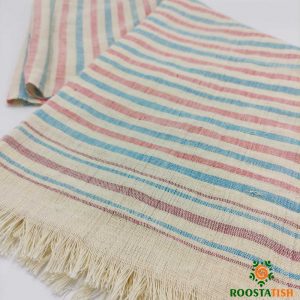
One of the types of traditional weaving, which is special to Khorasan and has been registered worldwide, is towel weaving, Towbafi or Toun weaving. The woven towel of Khorasan is common and known in almost all the villages of South Khorasan. Towbafi is the art of producing soft and delicate fabrics in various designs and colors.

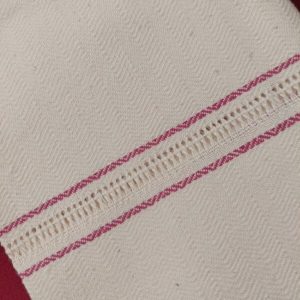
The fabrics produced in this type of traditional weaving fabric, in which only hands and feet are used, are woven very fine cotton fabrics, and due to the high humidity that the final product absorbs, this art is also called towel weaving, which is used to produce hand and face towels.

Reviving, the art of repentance

 In the last few years, in various cities and villages of South Khorasan, there has been a firm determination to revive the art of towel weaving in this region. On the one hand, the first mille weaving house of South Khorasan was established in Tajour House of Khosef city and the first mille weaving cooperative company of the province was launched in Khosef city. On the other hand, entrepreneurs such as Fatemeh Zakarian, one of the women of Khorashad village, and after a tourist visit to the village looking for hand-woven towels from Birjand village, have started a multi-year effort that has led to the revival of the traditional art of weaving, which is at least 300 years old.

With the efforts of the elders and veterans who remembered the weaving method of the traditional fabric of their ancestors.

And the weaving of cloth weaving machines and combs that came from the warehouses of the village houses, little by little cloth weaving workshops were established, which led to the creation of a stable business for women. With the success of similar projects and the support of cultural heritage, traditional towel weaving has now flourished again in more than twenty villages of South Khorasan province and has become a help for the livelihood of rural households.

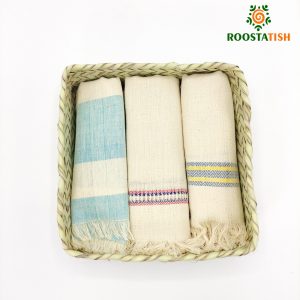
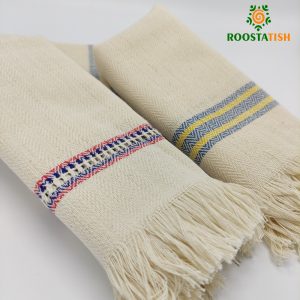
Did you know that you can purchase hand-woven towels from roostatish?

Woven with natural local cotton

Tobafi is made using local natural cotton with a brown color called Meleh. This cotton has an economic value almost three times that of white cotton, and its planting is carried out exclusively in Khosef city in South Khorasan province. In Khosef, about ten tons of cotton are harvested annually in seven hectares.

This city has been nationally registered as the city of millet and millet weaving due to its extensive activity and the high cultivated area of this type of cotton, and there are plans at the level of the city to provide the necessary infrastructure to increase its cultivation and also to protect this traditional process. It has been done.

Currently, the cultural heritage of Khosf city is looking for suitable places to grow Meleh cotton seeds, so that in addition to Majhan, Khor, Garjagan, and Khosf, other regions can also benefit from the production of this product. Because milled natural fiber cotton, such as white cotton, can be used in the weaving of all kinds of fabrics, all people who are skilled in weaving can use it as the raw material of their products, but this

Seed cotton has little availability and is considered a risky crop for farmers due to its sensitivity to weather and lack of insurance, that is why its cultivation has decreased over time.

Mele cotton has a long history in South Khorasan and is considered one of the heritage of South Khorasan. Mele natural fiber cotton is used to weave various products such as rugs, praying rugs and scarves. The inhabitants and natives of the Mele area consider cotton and everything woven from it to be auspicious. Mela cotton has a color similar to the soil in which it is planted, and it got its name from this soil, which is called Mel.

Due to the indigenous nature of the cotton planting and production process, it is not possible to sell Meleh cotton raw, and secondary products are produced exclusively in the South Khorasan region. Meleh cotton production stages include planting, growing and harvesting it like normal cotton, but it is not resistant to drought and cold, that is why annual crop insurance is necessary for farmers, otherwise a large part of their crop may be lost under the influence of climate change.

The stages of turning milled cotton into yarn

Millet cotton is turned into yarn in four steps, which are as follows:

First step: separating the cotton seed from the cotton husk with a hoe

Millet cotton fibers are shorter than white cotton, that’s why it cannot be tied with a bow.

The second step: smoothing the milled cotton with a cotton pad

Cotton grinding is done with a fork and on a wooden pillow.

The third step: turning milled cotton into yarn with a spinning wheel

The fourth step: turning the thread into a coil by the waknok.

Types of threads used in tobafi

Traditionally, in tobafi or tonabafi, cotton, silk, fluffy or corgi and cotton thread are used, but woolen thread, synthetic thread, acrylic thread, and cotton thread are also used in the process of weaving these beautiful and valuable handwovens. Silk fabrics in different colors, including purple, garlic and purple, and very finely woven, called Qanabiz and Vala, which are used in the traditional weaving of the region, are famous for making women’s clothes. Among the weaving areas of this type of cloth is Cherme district, one of the functions of Sarayan city.

Entrepreneurship and economic development by reviving the art of towel weaving

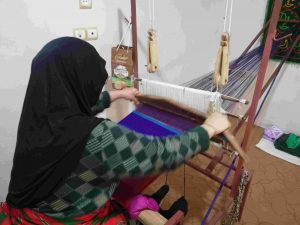
The weaving of traditional towels in South Khorasan is done with centuries-old originality and as in the past, with traditional two- or four-row machines and simple work tools, and is the art of village women. Earning income for the villagers whose economy and livelihood were endangered due to drought is the motivation to expand and grow the traditional weaving workshops. With the rise of this public determination and participation in national exhibitions, traditional woven fabric or tobafi came out of the village storehouse to be registered as a national art and craft.

Khorashad village is one of the functions of Birjand city, which, with the development of traditional textile weaving and the establishment of two cooperative companies with 520 members, high volume of production and participation in national and international exhibitions, was able to attract the attention of UNESCO’s evaluators for world registration. Currently, this village has 170 active workshops, several ecotourism residences, a bazaar selling handicrafts and rural furniture, which, in addition to creating a suitable and pleasant environment for tourists, helps the growth of the village’s economy and the recognition of its cultural heritage by attracting domestic and foreign tourists.

How to work in towel weaving

In order to weave the cloth by the ton weaving method, first the raw material of the weave, i.e. wool or fluff, is prepared and spun by hand. The spun threads are boiled and passed through flour to make it thicker. The cotton thread that is produced in this way is the primary material used in the weaving of this traditional fabric, which is woven as a weft on the side of the chela.

Traditional towel weaving is done in three stages. The method of work is that cotton threads are first prepared using a spinning wheel and a bobbin wheel, and then in an open space using a number of thin and equal-sized pieces of wood, skeeling is done, which is called “skeeling” in the local term.

All kinds of towel weaving products

Towels woven by the traditional weaving method, which is done entirely with weaving machines, for weaving all kinds of textiles with various uses, such as hand and face towels, bath towels, swimming pools, strainers, tablecloths or bread tables, nightshades, table napkins, handkerchiefs, headscarves, rugs. , clothes and other things are used.

With the help and support of the General Department of Cultural Heritage of South Khorasan, hand-woven towels of South Khorasan, which are very light and have excellent water absorption, are offered to pilgrims as Ihram clothes. This lightweight towel is perfect for traveling, especially in hot, dry climates.

All kinds of towel weaving products

Towels woven by the traditional weaving method, which is done entirely with weaving machines, for weaving all kinds of textiles with various uses, such as hand and face towels, bath towels, swimming pools, strainers, tablecloths or bread tables, nightshades, table napkins, handkerchiefs, headscarves, rugs. , clothes and other things are used.

With the help and support of the General Department of Cultural Heritage of South Khorasan, hand-woven towels of South Khorasan, which are very light and have excellent water absorption, are offered to pilgrims as Ihram clothes. This lightweight towel is perfect for traveling, especially in hot, dry climates.

The use of this traditional weaving method in the form of a new and efficient product and placing it in the luggage of pilgrims expands the market of this product and provides the possibility of pursuing extensive entrepreneurial economic plans in the region.

Towbafi products in international markets

One of the other pleasant events that became possible after continuous follow-up and efforts of the residents was the presentation of Birjand’s traditional handwoven fabric in international exhibitions and the attention of merchants to this product. For the first time at the Nowruz Handicraft Exhibition of Mashhad, Emirati merchants liked the softness and lightness and the unique traditional fabric of Tobafi and ordered fabric from the cooperative of this village.

The high quality of the product, the traditional texture, the unique work method, the use of vegetable dyes and completely natural textiles were the motivation of these businessmen to order. Ordering traditional cotton shawls, natural fiber towels, which were woven and dyed by hand in a completely traditional way, and sending them to Arab and even European countries, including Germany, Holland and France, has widened the Tobafi market.

Supporting as much as possible the cultural heritage organization of the province for the presence of artisans of South Khorasan in national and international exhibitions, providing loans, investing in education and marketing are the factors that should be taken into consideration for the growth of the traditional fabric and the art of weaving.

Finally, the successful supply of products such as hand-woven cotton towels that have lived in the country’s rich rural culture for years to be coordinated with the needs and demands of customers and bring the export of the culture and craftsmanship of Iranian artisans to the farthest corners of the world requires the determination of all and the cooperation of various organizations. It is to inspire other artists to revive the heritage of their ancestors and use it both to improve their livelihood and to introduce their culture to the world.

Iranian Folk Dolls

Local dolls of Iran 

Native dolls; Dolls that keep our culture alive. Dolls have always been our companions. 

The date of the creation of the first doll goes back to the first years of the presence of humans on this earth. The first dolls were made using wood, mud, stone, etc. In ancient Rome and Greece, when girls grew up and reached an age where they no longer needed dolls, they were offered to the goddesses.

The history of dolls in Iran goes back to years before the arrival of Islam. But there is not much information about these dolls and toys. These dolls were delicate sculptures that looked like humans, and birds, which were made of clay, wood, and stone.

 Dolls are usually made of cloth and wood. Today, the making of dolls has become more widespread and more diverse tools are used to make them.

Native dolls are dolls that keep the culture, history and customs of a region alive. These dolls are made by people from different regions and each of them have stories which they carry in their hearts. Native dolls are made with the hands of women, girls, men and boys of the village where they were born. Native dolls can be considered as cultural ambassadors of each region, ambassadors that arise from the heart of that region and travel to other regions to convey a special message.

Each of these dolls is the narrator of their own story and legend, culture, customs, atmosphere of their society.

There are about 2500 traditional native dolls in Iran, each of which is made according to the customs and culture of each region.

While sewing these dolls, rural women hum their own poems and lullabies and by sewing these dolls. It’s as if the toys and dolls are infused with their special culture since the very beginning. 

Native Persian dolls, the intangible heritage of our land

Intangible cultural heritage refers to cultural products and processes that have been left over time and from past generations. In Iran, 16 works of our customs, performing arts, skills, knowledge and culture have been registered as intangible heritage. Native dolls are also part of this heritage.

So far, 15 native dolls have been registered as intangible national heritage, and explanations about each of them are provided below.

Dotuk dolls:

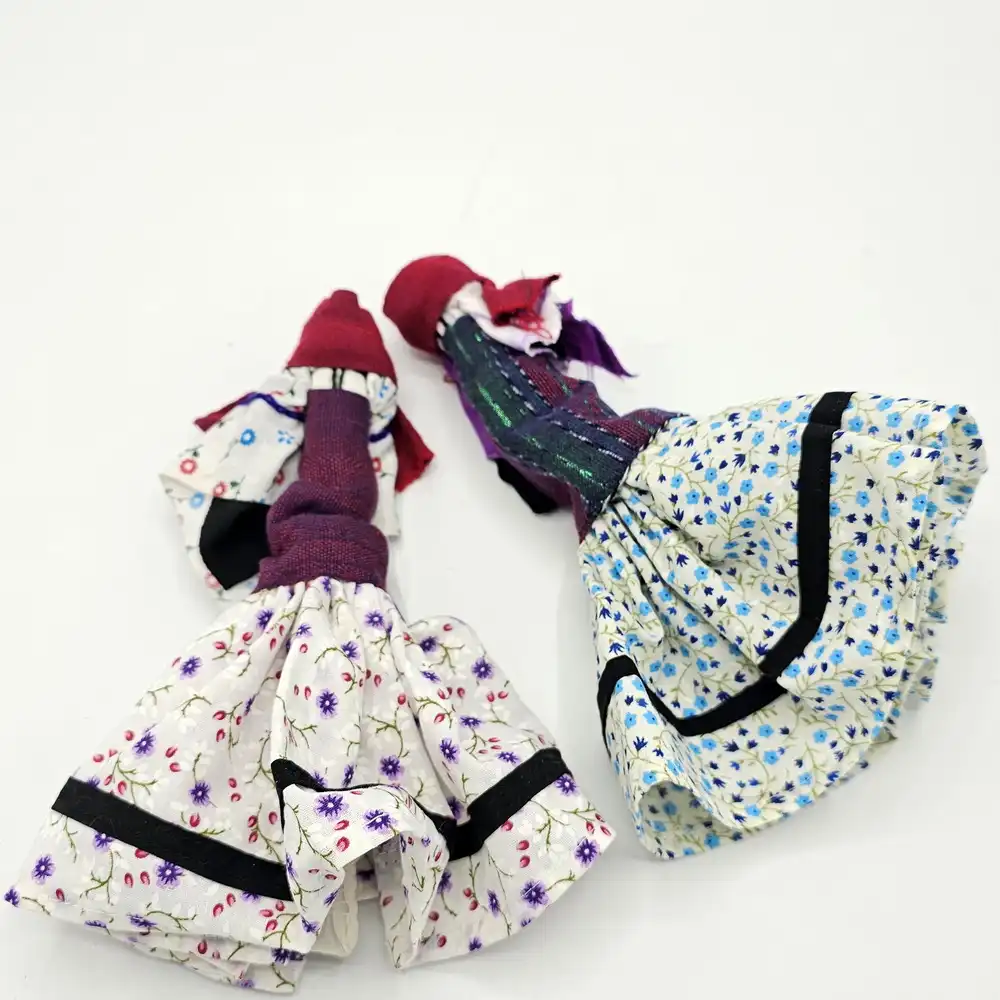
This doll, which is made in Tajmir village located in South Khorasan, was registered as one of the intangible national heritage in 2013. Dotuk doll is made of cloth, wood and other available ornaments. Dotuk is a symbol of a Baloch nomadic woman. A woman in an embroidered dress  and a colorful scarf. This doll was used as a symbol of rain in the distant past. (You can click here to buy this doll) In the rest of this article, we will introduce some native Iranian dolls.

Types of Iranian native dolls

 Dehtuluk doll:

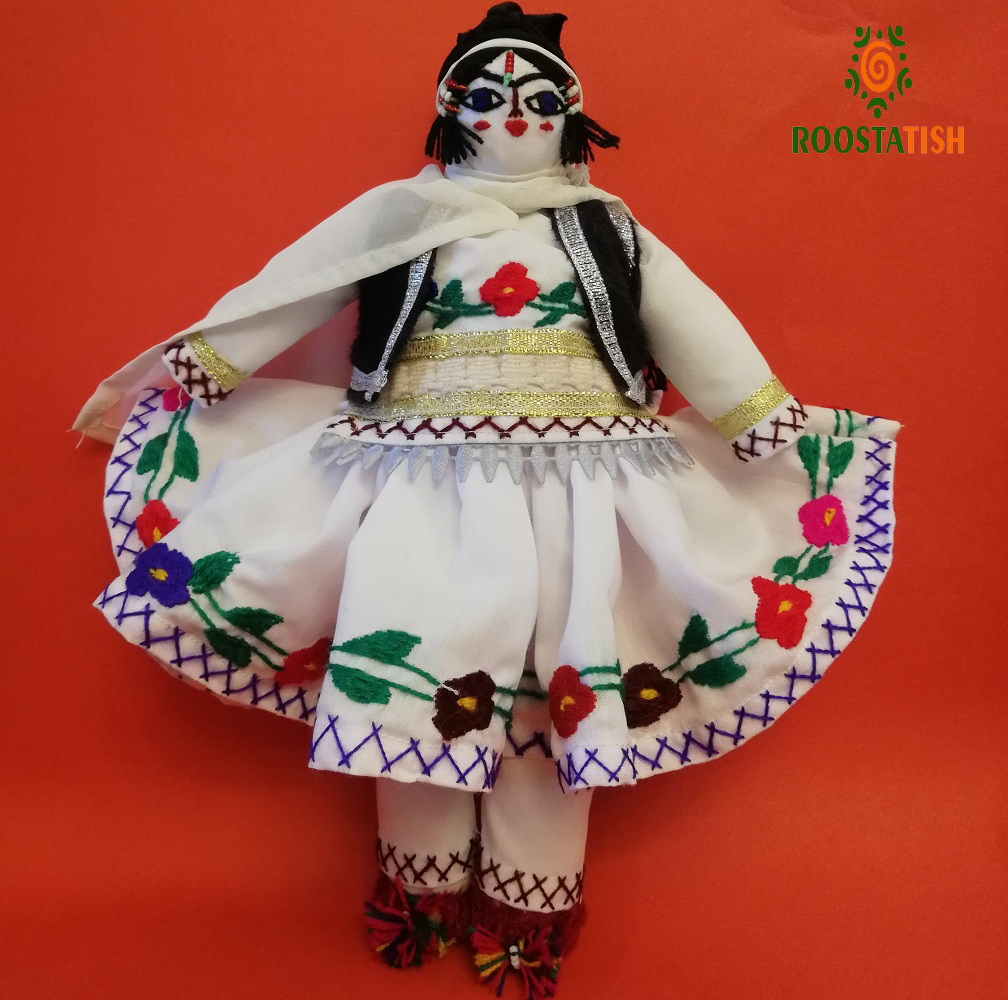
Dehtuluk doll or Dekhtuluk is the name of a native doll in Hormozgan region. Dehtulok means little girl in the local dialect, and the women and mothers of Shib Daraz and Burke Khalaf villages remember learning how to make these dolls from their mothers. These dolls are made by wrapping several colors of fabric around a cotton ball. 

Leily Bazbazak doll:

Lily Bazbazak doll belongs to three provinces of Khorestan, Chaharmahal, Bakhtiari and Fars and is known by three different names in each of these three provinces. Leily, Leily Dasti, are some of the different names of this doll. This doll is known as the happiest native Iranian doll, because it dances in the hands of its owners by means of movable joints and threads attached to its hands.

Arusu doll: This doll is handmade by the women of Shahrbabak city and is made with the simplest materials. This doll is about 120 years old.

Bibi Keg Doll:

Bibi Keg may not be just a doll but a symbol of a religious belief. This doll, which is in the category of ritual dolls, is made by the Zoroastrians of Yazd. 30cm Bibi Keg wears traditional Zoroastrian clothing and is not made for play and entertainment.

Native dolls are usually narrators of stories and legends told by the people of a region. In the following, we mention some of these dolls, each of which was made to keep a legend alive:

Golnar doll:

Golnar doll, which is sewn by the women artists of Sarmran. This doll is the narrator of the legend of Golnar, a girl who is in love. (Click to buy the Gulnar doll. ) This doll is sewn according to the love story of Gulnar and Bahman and is a reminder of the beautiful love of these two Kermanj youths. Golnaar is also available as earrings and necklaces which you can buy here! 

Khadijeh doll: Khadijeh doll is sewn in memory of the lasting love of Khadijeh and Siamand. This doll is made in Sarmaran village of Esfrain. A village full of stories and beautiful native dolls. (Click to buy Khadijeh doll.) 

Khadijeh is also available as earrings and necklaces which you can buy here! 

Sometimes native dolls have a mission beyond keeping stories and legends alive. They are made to preserve a species and make us more aware of some rare and endangered animal species. Among these, the  Caspian seal doll can be considered as a clear example of this type of dolls.

Dolls that we recognize even without faces

Dolls usually have human or animal faces. Sometimes these faces are made natural and sometimes abstract. But in some provinces of the country, dolls are made which are known as faceless dolls. The makers of these dolls believe that the doll maker should not leave any of his appearance characteristics in the doll he makes. Aroosk is one of the examples of faceless dolls.

How to keep native dolls alive?

The answer to this question is very simple. These dolls, which have been passed down from generation to generation, must continue to exist. This continuation of life requires attention and capital. A capital that will be sometimes as material capital and sometimes as spiritual capital. Keeping these dolls alive will lead to keeping the culture and rituals of our ancestors alive. Therefore, by supporting rural women and helping them in their livelihood and encouraging them to make and supply these dolls, we can play a significant role in achieving this goal. Also, by giving these dolls as a gift to children, in addition to familiarizing them with the clothes, language and culture of different ethnic groups in Iran, it will also contribute significantly to the preservation and continuation of this native art.

click here to see our main page of handmade Iranian Folk dolls

The Different Types Of Persian Embroidery

Embroidery is one of the most original and beautiful Iranian arts. The variety of this art is so great that one can understand the authenticity and the region to which that embroidery belongs to, according to the use of colors and the type and method of sewing. It is stated in many books that embroidery is the art of decorating fabric with simple and colorful threads, and it has different types, among which are needlework, tapestry, patchwork,  coin embroidery, golabton embroidery, etc.

“Roudoozi” or “Roukaari” is an art in which various patterns are created on fabrics without patterns or patterns by sewing or pulling a part of the weft of the fabric.

Roudoozi is one of the ways of fabric decoration which is done by needle.

The type of pattern, the threads used in the embroidery and the density of the stitches can also indicate the social status of the wearer of that dress.

In general, it can be said that different embroidery designs have unique characteristics that express the culture, environment and customs of people in different regions.

How long has embroidery existed in Iran?

The art of embroidery is very old, so traces of this art can be seen in the works left from the Achaemenid period. These works show that Iranians were very interested in luxurious clothes and decorating fabrics; But the oldest embroidery in Jamande dates back to the Seljuk era.

The remarkable thing about the embroidery left over from different periods of Iran’s history is that in the Sassanid era, the patterns used on the embroidery are very similar to the patterns used on sculptures, plaster casts, metal containers, etc.

In the Ilkhanid period, the influence of Chinese people’s art on embroidery is very evident.


But as it is evident from the evidence, during the Timurid period, the country’s embroidery artists were forced to migrate and most of the people who were skilled in this art traveled to the city of Samarkand. This is why no artworks from this period have survived.

The peak of the art of embroidery in Iran was the Safavid era. The progress of this art in this period has been so much that no trace of the influence of Chinese art can be seen anymore.

Among the common types of embroidery in the Safavid era, we can mention glabton embroidery, landre embroidery, pattern embroidery, ten-one embroidery, sequin embroidery, tapestry embroidery, cocoon embroidery, sekme embroidery, flower embroidery, glass embroidery, vermilion embroidery, pearl embroidery, and bergamot embroidery.

This art continued in the Afsharia and Zandiyeh era with the same glory as the Safavid era, until during the Qajar era, embroidery reached all the regions of Iran. It was during the Qajar period that embroidery, Zoroastrian embroidery, cashmere embroidery, cream embroidery, ajideh embroidery, samosa embroidery reached their peak and patte embroidery made remarkable progress.

How many categories are day embroidery divided into?

According to the research, some researchers believe that embroidery is divided into three categories and others believe that it is divided into six categories.

According to some who divide this art into three categories, the types of embroidery are:

Embroidery that sews all over the fabric with thread to create a pattern on it. Examples of this type of embroidery include Baloch needlework, Rasht crochet and Kerman patte embroidery.

The embroidery in which the thread passes through the weft of the fabric and creates a mesh and color for it. One of the examples of this type of embroidery is Isfahan needlework.

The first category: elaborate embroidery, whose main background is hidden under colorful stitches. Bukhara embroidery, pattern embroidery, crochet embroidery, patte embroidery, series embroidery, Mamqan embroidery, Baloch embroidery and Kurdish embroidery are examples of embroidery that are included in this category.

The second category: embroidery that only a part of them is sewn and the rest of the work is filled with the background color. Silk embroidery, cream embroidery, braid embroidery and double embroidery are among these types of embroidery.

The third category: there are embroidery that is sewn in a special way. Examples of this type of embroidery are Isfahan needlework and net embroidery.

The fourth category: embroideries made with metal threads. such as: glabton embroidery, ten-one embroidery, keram embroidery, cash embroidery and tapestry embroidery

Embroidery tools

Different tools are used in different types of embroidery, and the types of fabric and thread are the common tools of all these embroidery. It is natural that the type of thread and fabric will be different depending on the type of embroidery.

The most important use of day embroidery:

Rudozis are used to decorate rugs, tablecloths, cushions, pillowcases, shoes, clothes, mattresses, car seats, etc. The artists of different fields of embroidery are usually women and they also use these arts for wall hangings and handkerchiefs.


Examining the motifs used in all kinds of embroidery

In general, the motifs used in all types of embroidery can be divided into four categories: natural motifs, plant motifs, geometric motifs and animal motifs.

Natural motifs: These motifs are motifs that are related to nature and are designed with inspiration from it. Patterns such as the sun, trees, birds and…

Plant motifs: It is no secret that flowers and plants have a special place in Iranian handicrafts. These motifs are usually motifs that are first imprinted in the artist’s mind and then depicted. They sit next to each other as symbols of nature and are completely abstract. Of course, sometimes they step into the valley of realism and display a role of flowers. Flowers that often include bushes, marigolds, four-leaf clovers, and evening primroses, etc.

Sometimes plants and flowers are sewn together with other decorative items and sometimes separately, but the interesting point is

They are usually embroidered next to each other in a certain order.

Animal motifs: these motifs are sometimes abstract and sometimes real. Patterns that are often designed based on the characteristics of animals and are only a symbol of them.

Animal motifs are usually placed next to other motifs such as plants and flowers. The most animals whose images are used in embroidery are deer and peacocks. All kinds of slime designs and plants are also used to decorate around these motifs.

Geometric patterns: Geometric patterns play a big role in traditional Iranian embroidery. The basic elements of these motifs are triangles, squares and rhombuses.
Geometric motifs that are usually used in the embroidery of Sistan and Baluchistan are: Edink, Ben Tas, Topkeg, Shida, Hurdel, etc.

Broken motifs: Broken motifs are patterns that consist of several straight and oblique lines. These motifs are among the most basic embroidery motifs.

Gardan motifs: These motifs became popular in Iran from the beginning of the 9th century AH. In these motifs, flowers, flowers and simple rotating branches are usually used. These motifs are also called tangerine.

Motifs: These motifs include a set of different motifs that are abstractly or realistically placed next to each other. Patterns are usually formed in rhomboid frames on the fabric surface.


Today, the art of embroidery can be seen in Europe, Africa, Oceania, North America and Latin America. However, these embroidery designs are completely different from Asian and Iranian types.

 with every purchase from Roostatish, you participate in a rural development project

Everything related to Balochi needlework and its cultural identity

Balochi needlework is one of the most beautiful Iranian cultural arts, which is widely used among the people of Baluchistan, but unfortunately, there is no detailed history available regarding the history of this art, but some studies show that Balochi needlework was first developed by the “Ilkhani” tribe.

The art of needlework is very popular among Baloch women, and the people of Baluchistan consider this art as an expression of their culture and traditions. This method of embroidery is the most used method to decorate clothes, especially simple and local clothing. 

For example, on women’s clothing (mostly traditional Balochi dresses) , needlework is used in four parts. These parts include the top of the sleeves, the chest area, and the lower part of the chest, which is sewn vertically to the bottom of the dress, as well as the pockets (and in the clothes that also include pants, the lower part of the pants are also embroidered.) 

The beautiful art of Baloch needlework is one of the most authentic Iranian methods in the field of embroidery, and researchers have found similar works of this art in pre-Islamic petroglyphs and pottery. This shows how this form of art goes way back. 
What kind of stitches are used in Balochi needlework?

As we mentioned, needlework is one of the most common original arts of embroidery in Iranian handicrafts, decorating fabric using regular geometric shapes derived from natural elements is the main feature of needlework that has made it popular. But in relation to Balochi needlework, it can be said that the type of stitching in each region of Sistan and Baluchistan province has differences from each other and in each region a special name has been chosen for the type of stitching.

In general, two types of sewing are very common among the people of Baluchistan.

The role and place of needlework among Baloch people

Always Wearing the traditional Balochi clothes is a certain norm among the Baloch people. 

So needlework in traditional clothes can be considered a part of the culture of this province, the symbols sewn in traditional clothes can be considered ethnic belonging. 

It is interesting to know that the art of needlework is also popular among the Baloch people of Pakistan, Afghanistan and Turkmenistan.

Tools used for needlework

Needlework is an art in which the artist can create with just a few simple tools. Of course, let’s not forget the sufficient skill and hard work and persistence that goes into it. 

The working tools in this industry are:

1- needle

2- Thimble

3- Scissors

The needle or “Suchen” (in Balochi language is called Suchen or Sichen) is the main tool, the size of the needle can be changed depending on the type of sewing and the desired fabric. 

Raw materials needed in needlework:

Regarding needlework, you probably can guess that thread and fabric are the main raw materials that are needed. The important thing about these raw materials is that in this art, colors are limited and you are only allowed to use six colors.

The use of these colors has a special order and there are rules that the artist must follow. 

The colors used in fabric are:

Burgundy or maroon, red, orange, black, white, green and blue. 

The colors of “Suchen Duzi” (needlework)  threads:

1- Seven-color thread (this type of thread originally contains 6 colors)

2- two-color yarn (brown and red yarn)

3- Use of single color thread (white, black or brown)

The threads used in this art are usually silk threads, because these threads are of better quality and give a better effect to the sewing pattern. 

Types of work in Balochi needlework

In Balochi needlework, sewing is usually done in two ways, this sewing can include a heavier type of work or small work. The former’s stitches are said to be a type of needlework that has a high level of delicacy, and basically, these types of stitches are very time-consuming and require a lot of effort, because the motifs in the elaborate designs are very small and delicate; In contrast to smaller designs and micro-stitches, which is a type of stitch that the embroiderer takes less time to do, because in these designs, large patterns are used. Clothes and items that have the heavier type of stitching usually have a much higher price.

Application of Balochi needlework

In general, we know that Balochi needlework is used to decorate all kinds of artistic products that are cloth in Balochistan, but without a doubt, the main use of Balochi needlework that has been popular since the past is to decorate Balochi women’s clothes, especially traditional clothes. This stitch is also used to decorate cloth tablecloths, curtains, rugs and needlework cushions and even some jewelry. It is interesting to know that nowadays needlework pieces are used in sewing some formal clothing like coats and even different bags.
The most important and impressive feature in Balochi needlework are the patterns. The generality of these designs are the same in all decorations, but Baloch women can make changes in them based on their taste and experience.


The types of patterns in needlework are:

Geometric patterns:

Geometric patterns are one of the most widely used motifs in needlework, geometric patterns can be very diverse due to their characteristics, the use of proportions in geometric shapes such as triangles, rhombuses, squares, and other shapes.

Animal motifs:

In embroidery, animal patterns are divided into realistic patterns and abstract patterns. Abstract animal motifs are usually derived from the characteristics of animals that exist in Baluchistan; For example, the camel tail design is one of the most widely used needlework patterns.

But the realistic animal motifs refers to the design of the specific look of animals, the use of these designs in needlework is very rare, unlike abstract animal motifs, and these motifs are usually used to create other arts such as rugs and carpets.

Plant patterns:

Plant motifs are basically the transformation of realistic flowers into a symbolic appearance, the existence of high diversity in flowers is the reason for using these symbols in needlework. Women use their creativity to create plant patterns. 

Plant patterns are mostly abstract designs that are created by maintaining geometric features.

Human patterns: 

These patterns are also very abstract and they don’t necessarily look like a human, but have similar characteristics and are a product of very creative minds. 

As we said, needlework production has expanded and is not only limited to the traditional clothes of Baluchistan, nowadays artists in handicrafts use this art to create other works such as bedspreads, rugs, tablecloths, curtains, ties, bags and even shoes.

you can purchase all kinds of Balochi needlework handmade by th women of Baluchistan at https://roostatish.com/

You can also click on the links bellow to read about: