gplabetoon embroidery

golabetoon embroidery

Introduction to Golabetoon embroidery

Golabetoon embroidery is an art that became popular in Iran many years ago during the Achaemenid period, and after that it spread in neighboring provinces and countries of Iran. The origin of this art can be found in southern cities and provinces such as Shush, Hormozgan or in the center such as Isfahan. This art is one of the most popular Iranian arts among the people of different regions of Iran and other countries. Nowadays, many tourists want to buy clothes and decorative items that are made with the art of low embroidery or Golabetoon. For this purpose, we will further introduce you to the uses and benefits of this art. 

(read more about other types of embroidery here) 

This art is used to decorate various fabrics such as rugs, pillowcases, curtains, bags, and even mantles. In Roostatish, there are various products with Golabetoon Embroidery art, which are sewn by the artist girls of Qeshm villages. embroidered masks and bags are among these products that are designed using local and herbal symbols and signs of the region.

What is Golabetoon doozi?

This art, which is also known by other names such as flower embroidery or kam doozi, is an old art whose beginnings in Iran go back to the Achaemenid period. In different provinces and cities of Iran such as Isfahan, Hormozgan, Bushehr, Shush and Yazd, this art is included in the category of known arts for women. Many local women earn money for themselves or their family members by performing artistic activities such as flower embroidery. If we want to refer to the way of doing this art, we should say that this art is done on traditional and delicate fabrics such as traditional clothes or delicate wedding nets. Usually, these fabrics are decorated with gold, silver, and white color coatings and the final product is sold in the market.

If we want to refer more precisely to Golabetoon, we must say that Golabetoon is a kind of natural thread that is used to sew metal covers and sequins in different colors such as yellow and white. Usually, women artists use this thread to create beautiful designs and patterns such as flowers, slime and symbolic designs. Today, the art of Golabetoon Embroidery is also done on gowns, mantles, chadors, curtains, pillowcases and collars, and it multiplies their beauty.

For the first time, the art of Golabetoon embroidery was created in China about 105 years before the birth of Jesus Christ, and then it was taken from China to Iran and Iran’s neighboring countries (modern India and Pakistan) and spread. After the Achaemenid period (which was the beginning of this art in Iran), this art spread throughout the country.

Archaeologists have found designs and artistic clothes embroidered with flowers dating back several years in Iran. And today this art is exported to the neighboring countries of Iran, Pakistan, Afghanistan and Tajikistan.

Use of hand and thread

All kinds of Golabetoon embroidery:

This art is sewn by hand and thread on a bow or wooden frame by Golabetoon thread. In this way, the artist draws the motif he wants on the fabric and creates his art on the fabric using thread and colored coatings (such as red, gold, silver). Sometimes skilled artists using their skill and elegance use sequins and beads to make this art more beautiful.

This art has many different types. As we mentioned above, this art is also known by names such as the art of low embroidery, embroidery and bow embroidery. In the following, we will introduce you to the different types of this art:

The first art is called Badaleh Doozi.

Badaleh embroidery, which is also known as Talibafi, is one of the arts related to Golabetoon embroidery. The art that is done on southern pants with Golabetoon thread is called Badaleh Doozi. This art is usually used in Hormozgan province to decorate women’s trousers, especially newlyweds. Usually, the price of these pants is much more expensive compared to simple pants. The designs and motifs of these pants are liked by a large group of people.

The second case is to use the art of embroidery directly to decorate different clothes and fabrics.

This art is used directly on clothes, curtains, and prayer rugs. This art is usually used to enhance the beauty of clothes and fabrics that can be given as gifts (such as wedding dresses for newlyweds). This art exists in various designs in different cities of Iran such as Bandar Abbas, Bushehr, and Hormozgan. You can purchase the desired product by viewing the different designs of this art in different cities of Iran.
to buy the best bag of golabetoon open the link below :
https://roostatish.com/product/embroidered-handcrafted-wristlet/

The next type of this art is to use it on parts of clothes such as the collar.

You can use the art of embroidery to connect different parts of clothes such as collar, sleeve, vest or ribbon.


As you have seen, this art exists in various types in our dear country of Iran. For this purpose, you can choose any of them according to your taste and start learning in this field.


Uses of Golabetoon embroidery art in the past

In the past, gold and silver were used for weaving on expensive fabrics. The fabrics that are special for this art include mahout fabrics, wool, silk and velvet fabrics. Of course, even today, these fabrics, especially Hariz fabric, are used together with bows to produce low-embroidery art. This art is usually used in the courts and palaces of Persian sultans and kings to prepare the clothes of princes and kings.

In addition, this art has been used to make pillow covers, prayer rugs and wallets. Since the clothes and accessories made through this art were expensive, not all members of the society could produce these fabrics. Rather, only rich people and high levels of society have had the ability to buy and use this art in their life and for their clothes. ‏‎


Golabetoon embroidery applications in the present time

Today, the art of Golabetoon embroidery is used in the production of Iranian traditional and formal clothes. In addition, Fortunately, today this art has attracted many fans all over the world. This positive point has increased the number of artists who want to learn this art. Dear ones, you can easily produce low-embroidered art products or Golabetoon embroidered products by learning this art and by increasing your skills, and in this way, you can earn money in this way.


What do I need to learn from the art of embroidery?

 it should be said that you need to increase your knowledge about this art and its creation methods. By increasing your knowledge about this art, you can decide rationally whether this art is useful for you or not. After increasing your information, you can consult and talk with artists who are active in this field. In this way, you will get to know more about the principles and process of producing collars or beautiful clothes that are made using this art.

In the end, we hope this article has helped you to learn more about the art of Golabetoon Embroidery.

‍️ Iranian Mythical Dolls: From Legends to Handcrafted Art

‍️ Iranian Mythical Dolls: From Legends to Handcrafted Art

️ Iranian Mythical Dolls: From Legends to Handcrafted Art

Iranian folklore is rich with mythical creatures and legends that have been passed down through generations. Among these, the tales of Melmodas, Mother of the Sea, and Shahmaran stand out. These stories not only captivate the imagination but have also inspired artisans, particularly women in rural communities, to create handcrafted dolls that embody these legendary figures.

Melmodas: The Enchantress of the Sea

Melmodas is a mythical sea creature known for her enchanting beauty and deadly allure. Descriptions portray her as a tall, captivating woman with a sweet fragrance emanating from her, drawing men towards her. However, her lower limbs are said to resemble sickles, and once a man is ensnared by her charm, she uses her sickle-like legs to fatally harm him.

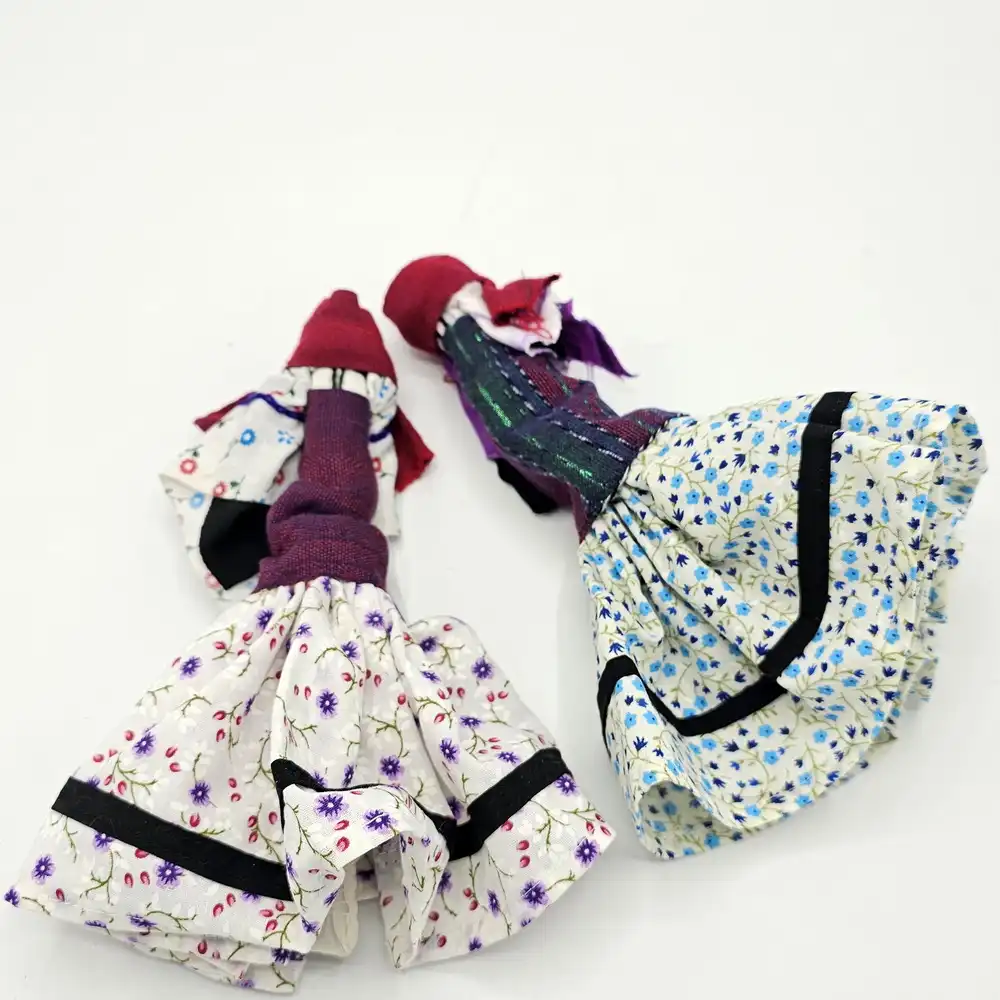
In rural Iranian communities, especially in areas like Turkmen Sahra, women artisans have crafted dolls inspired by Melmodas. These dolls are meticulously handmade, often using felt and other natural materials, capturing the essence of this mythical sea enchantress.

Mother of the Sea: The Benevolent Guardian

The Mother of the Sea is a benevolent mythical figure believed to reside in the depths of the Caspian Sea. She is considered a protector of sailors and fishermen, guiding them safely through treacherous waters. Her presence is often associated with calm seas and bountiful catches.

Artisans in coastal regions of Iran, particularly in Mazandaran, create dolls representing the Mother of the Sea. These dolls are adorned with symbols of the sea, such as fish and waves, and are crafted with materials that reflect the coastal environment, serving as both protective charms and artistic expressions of the legend.

Shahmaran: The Queen of Snakes

Shahmaran is a legendary creature with the upper body of a woman and the lower body of a snake. She is revered for her wisdom and healing abilities. The most famous tale involves a young man named Jamasp, who discovers Shahmaran living in a subterranean palace. When the king falls ill, Jamasp is forced to reveal Shahmaran’s existence, leading to her tragic death. However, her wisdom endures, and she is remembered as a symbol of knowledge and sacrifice.

In regions like Khorasan, women artisans have created dolls inspired by Shahmaran. These dolls often feature intricate designs that highlight her dual nature, combining human and serpent elements, and are crafted using traditional techniques passed down through generations.

The Art of Doll-Making in Rural Iran

In rural Iranian communities, the tradition of doll-making is more than just a craft; it is a means of preserving and transmitting cultural narratives. Women artisans, often working within the confines of their homes, use locally sourced materials such as felt, wool, and clay to create dolls that represent various mythical figures.

These handcrafted dolls serve multiple purposes: they are educational tools for children, decorative items for homes, and tangible representations of the rich tapestry of Iranian folklore. The process of creating these dolls involves intricate techniques and a deep understanding of the stories they represent, ensuring that each doll is a unique embodiment of the legend it portrays.

Shahmaran: The Legendary Serpent Goddess and Her Inspiring Legacy

Shahmaran: The Legendary Serpent Goddess and Her Inspiring Legacy

Shahmaran: The Legendary Serpent Goddess and Her Inspiring Legacy

Introduction

Deeply rooted in Kurdish, Iranian, and Middle Eastern folklore, Shahmaran is a mythical creature celebrated for her wisdom, mystical powers, and profound connection to nature. Her name translates to “King of the Snakes”, reflecting her dominion over serpents. Shahmaran is depicted as half woman, half snake, symbolizing fertility, life, and the secrets of the natural world.

In addition to her spiritual and cultural significance, Shahmaran is renowned as the goddess of wisdom and medicinal knowledge, particularly in the use of herbs and natural remedies. Her story has inspired artists, storytellers, and craft makers for generations.

The Legend of Shahmaran

The most famous tale centers on a young man named Jamasp (or Tasmasp in some versions). One day, while searching for honey, he accidentally discovers a hidden cave. Deep inside, he finds a magical chamber inhabited by Shahmaran and thousands of snakes.

Over time, Jamasp be friends Shahmaran. She teaches him about medicinal herbs, secret remedies, and the deeper wisdom of the natural world. Through her guidance, Jamasp learns to heal the sick and understand the balance between humans and nature.

Eventually, Jamasp longs to return to the surface. Before leaving, Shahmaran warns him to keep her existence a secret. But when the king falls gravely ill, his vizier discovers that the cure lies in Shahmaran’s flesh. Forced to reveal her location, Jamasp follows her instructions carefully: the flesh is cooked, and only the second serving is to be eaten by the king. The vizier, who drinks first, dies, while the king is cured. Jamasp inherits Shahmaran’s wisdom and becomes renowned as a healer and wise man.

Shahmaran: The Legendary Serpent Goddess and Her Inspiring Legacy

Symbolism and Cultural Significance

Shahmaran’s story carries deep symbolic meanings:

  • Wisdom and Knowledge: She embodies the acquisition of hidden knowledge, including secrets of medicinal herbs and the natural world.
  • Fertility and Life: Her dual human-snake form symbolizes the cycles of life, nature, and regeneration.
  • Trust and Betrayal: The narrative teaches lessons about responsibility, secrecy, and the consequences of broken trust.
  • Protection and Blessings: In Kurdish culture, Shahmaran is revered as a mother goddess, and her image is used in art, textiles, and home decor to bring protection, especially to women and children.

Shahmaran-Inspired Handcrafted Products at Rostatish
At Rostatish, we celebrate Shahmaran’s enduring legacy through handcrafted, folklore-inspired products that bring her wisdom and beauty into your home. Our collection includes:

  • Legendary Dolls: Shahmaran dolls capturing the mythical and mystical essence of this serpent goddess, perfect for collectors and cultural enthusiasts.
  • Cushions and Pillows: Embroidered with motifs inspired by Kurdish folklore, symbolizing wisdom, protection, and creativity.
  • Table Runners and Linens: Featuring intricate designs that tell the story of Shahmaran and the rich heritage of Iran.
  • Bags and Accessories: Handmade items combining traditional craftsmanship with modern usability, inspired by ancient symbolism.

Each item is a tribute to Shahmaran as a goddess of wisdom and medicinal knowledge, allowing her story to live on in your everyday life. From mythical dolls to folk art-inspired home decor, these products celebrate the beauty and depth of Kurdish and Persian traditions.

Shahmaran: The Legendary Serpent Goddess and Her Inspiring Legacy

Why Shahmaran Inspires Us

Shahmaran is more than a character in folklore—she represents:

  • The power of learning from nature
  • The preservation of traditional knowledge of medicinal herbs
  • Creativity and imagination in storytelling and craft
  • The connection between myth and everyday life through home decor

By incorporating Shahmaran-inspired products into your home, you honor this legendary serpent goddess and her role as an enduring symbol of wisdom, healing, and cultural heritage.

Shahmaran: The Legendary Serpent Goddess and Her Inspiring Legacy
Faceless Folk Dolls of Iran: Philosophy, Types, and Cultural Roots

Faceless Folk Dolls of Iran: Philosophy, Types, and Cultural Roots

Faceless Folk Dolls of Iran: Philosophy, Types, and Cultural Roots

Across many regions of Iran, some traditional dolls are intentionally made without faces. This choice is not accidental; it reflects deep cultural, religious, and symbolic beliefs. In this article, we will explore the different types of faceless dolls in Iran, the reasons behind their design, and the philosophy that makes this tradition unique. By focusing on keywords like faceless dolls Iran and Iranian faceless dolls, we also shed light on an important aspect of Iran’s intangible cultural heritage.

  1. Qorchoq (Turkmen Faceless Doll)

One of the most recognized Iranian faceless dolls is the Turkmen “Qorchoq.” This doll has no facial features at all. Why? According to Turkmen beliefs, perfect creation belongs only to God, and humans should not interfere with divine design. Therefore, the doll is intentionally left incomplete—without a face—as a symbol of respect for divine creation.

Made from wood, fabric, and buttons, the Qorchoq often carries cultural signs of Turkmen identity. For example, a scarf or a ring might symbolize whether the doll represents a married woman.

  1. Aroosk or Aroos (Ghaleh Ghafeh, Golestan)

In the village of Ghaleh Ghafeh, locals make a doll called “Aroosk” or “Aroos.” It is always faceless. The reason lies in the belief that the creator’s personality unconsciously influences the doll’s appearance. By keeping the doll faceless, the identity of the maker remains hidden.

These dolls usually wear three scarves (mandil) on the head, reflecting the colorful clothing of the local women.

  1. Dohtolok (Qeshm Island, Hormozgan)

The Dohtolok, whose name means “little girl” in the local dialect, is a very small faceless doll made from colorful fabrics of the region. The philosophy of facelessness here is the same as the Turkmen view: only God creates complete beings, and human hands should avoid giving full human features.

  1. Bigak Lili (Handijani Doll – Southern Iran)

Found in southern and western provinces such as Khuzestan, Bushehr, Fars, Lorestan, Kerman, and Sistan-Baluchistan, the Bigak Lili is a faceless moving doll. The lack of a face allows children to use their imagination freely, assigning emotions and stories to the doll on their own.


  1. Lilik and Domaik (Mahshahr, Khuzestan)

These faceless dolls resemble a bride and groom. Instead of facial features, a cross-shaped stitch is sewn on their faces. The cross is a symbol of the sun, ancient Mithraism, and blessing. Due to Mahshahr’s ethnic diversity, these dolls are also known by different names such as Lilik, Lo’bat, or Bigak.


  1. “Bi” – Ritual Doll of Dezful

In Dezful, a special faceless doll called “Bi” (meaning “bride” in the local dialect) is part of wedding traditions. It is placed in the bride’s room as decoration and often accompanies the bride in her dowry. Symbolically, the Bi doll is considered a silent companion, sharing the bride’s joys and sorrows. This cultural practice highlights the spiritual role of dolls in Iranian rituals.

The Philosophy Behind Faceless Dolls in Iran

The facelessness of these dolls is rooted in several cultural and spiritual principles:

  1. Respect for Divine Creation – Only God can create perfect beings; leaving dolls faceless acknowledges this belief.
  2. Protecting the Maker’s Identity – A faceless doll prevents the artist’s personality from shaping the doll, keeping it neutral.
  3. Encouraging Imagination – With no fixed expression, children invent their own emotions and stories for the doll.
  4. Symbolic Representation – Some faceless dolls carry cultural symbols, such as the sun-cross in Lilik and Domaik, representing fertility and blessing.
  5. Ritual and Emotional Roles – Dolls like the Bi of Dezful serve as spiritual companions, reflecting the deep emotional and symbolic roles dolls play in Iranian life.


Conclusion

The world of faceless Iranian dolls is a fascinating intersection of spirituality, creativity, and cultural tradition. From Turkmen Qorchoq to the Dezfuli Bi, each doll tells a story not through its face, but through its symbolism, clothing, and cultural meaning.

For collectors, researchers, and enthusiasts, these traditional Persian dolls represent more than toys—they are living pieces of Iran’s intangible heritage. By understanding their philosophy, we learn to see beauty not in the details of a face, but in the depth of tradition behind it.

Nomadic Handwoven Treasures of Iran

Nomadic Handwoven Treasures of Iran: Varis-Bafi and Shirdang-Bafi

Nomadic Handwoven Treasures of Iran: Varis-Bafi and Shirdang-Bafi

Introduction

Among the wide range of nomadic handicrafts of Iran, two of the most fascinating weaving techniques are Varis-Bafi (وریس‌بافی) and Shirdang-Bafi (شیردنگ‌بافی). These ancient textile arts are created by Iranian nomadic tribes using simple tools, natural fibers, and centuries-old techniques passed down through generations. Internationally, these weaving styles are often referred to as tablet weaving or card weaving, yet in Iran, they carry unique cultural meanings deeply tied to the daily life and identity of nomads.

These arts are not just decorative; they are functional handwoven products, closely related to the livelihood, rituals, and traditions of Iran’s nomadic communities.


What is Varis-Bafi?

Varis-Bafi is a type of narrow weaving made by Iranian nomads, especially in western and southern regions of Iran. The word Varis refers to the strong woven bands or straps produced in this method.

  • Purpose: These woven straps are mainly used in daily nomadic life — such as for tying loads on pack animals, securing tents, or decorating household equipment.
  • Technique: The weaver uses a set of wooden cards (sometimes square with four holes) and threads passed through them. By rotating the cards, patterns emerge on the strap.
  • Materials: Nomads use sheep wool or goat hair, dyed with natural colors like madder red, indigo blue, or walnut brown.
  • Designs: Geometric motifs, tribal symbols, and zigzag patterns dominate Varis-Bafi, each reflecting the tribe’s identity and cultural background.
Shirdang-Bafi: The Art of Decorative Straps

Shirdang-Bafi is another form of tribal weaving, practiced among nomadic groups in southwestern and central Iran.

  • Function: Unlike Varis-Bafi, which is mostly utilitarian, Shirdang straps are highly decorative. They are used to adorn horse and camel saddles, tent edges, and wedding equipment.
  • Meaning of the Name: “Shirdang” literally means “lion’s tail,” symbolizing strength, protection, and beauty in nomadic culture.
  • Colors and Patterns: These woven straps are colorful, often featuring diamond motifs, triangular shapes, and symbolic lines representing nature, fertility, and spirituality.
  • Cultural Value: Shirdang-Bafi is considered a form of nomadic art, showcasing the creativity of women who weave them during migration seasons.
Tablet Weaving: The Global Connection

What Iranians call Varis-Bafi and Shirdang-Bafi is widely recognized across the world as tablet weaving or card weaving. This ancient craft exists in many cultures — from Viking bands in Scandinavia to medieval straps in Europe. However, the Iranian version is distinguished by its:

  • Use of tribal symbols unique to nomads of Iran
  • Natural wool and eco-friendly dyeing traditions
  • Strong connection to nomadic lifestyle and rituals

This global parallel makes Iranian nomadic weaving highly appealing to collectors, anthropologists, and lovers of handwoven tribal art worldwide.

Cultural and Artistic Significance

Iranian nomadic weavings such as Varis-Bafi and Shirdang-Bafi are more than just crafts. They represent:

  1. Nomadic Identity – Patterns often encode tribal affiliations and social status.
  2. Practical Value – Strong straps for securing loads, reflecting the needs of a migrating lifestyle.
  3. Artistic Expression – Women artisans embed stories, beliefs, and symbols into the woven bands.
  4. Sustainability – Using hand-spun wool and natural dyes, these crafts embody eco-friendly traditions.
Why Collectors and Enthusiasts Value Nomadic Weaving

In recent years, interest in Iranian nomadic handicrafts has grown among collectors, museums, and handmade textile enthusiasts in North America, Europe, and Asia. Varis-Bafi and Shirdang-Bafi attract attention because they combine:

  • Functionality – still usable in modern interiors and fashion accessories
  • Authenticity – each piece is one-of-a-kind, tied to a tribe and artisan
  • Cultural Depth – carrying centuries of Iranian nomadic heritage

They are not only historical but also adaptable to modern design trends, appearing as belts, wall hangings, or decorative trims in contemporary art and fashion.

Conclusion

Varis-Bafi and Shirdang-Bafi are shining examples of Iranian nomadic weaving traditions. More than just tribal handicrafts, they are living artworks that connect us to the resilience, beauty, and creativity of Iran’s nomadic communities.

For those who love handwoven by nomads, exploring these traditional arts is like stepping into a world where utility, symbolism, and artistic imagination meet. Whether you call it tablet weaving, card weaving, or by its Iranian names — Varis and Shirdang — this heritage deserves recognition and preservation as one of the jewels of Iranian nomadic art. you can also find varis product such as glasses strap, bag, belt, in these links below:
1) https://roostatish.com/product/handwoven-cotton-tote-bag-with-nomad-card-woven-strap-sustainable-tribal-inspired-design/
2) https://roostatish.com/product/handwoven-tribal-belt-gozhdin-flower-pattern/
3) https://roostatish.com/product/handwoven-cotton-tote-bag-with-nomad-card-woven-strap-sustainable-tribal-inspired-design/