Faceless Folk Dolls of Iran: Philosophy, Types, and Cultural Roots

Faceless Folk Dolls of Iran: Philosophy, Types, and Cultural Roots

Faceless Folk Dolls of Iran: Philosophy, Types, and Cultural Roots

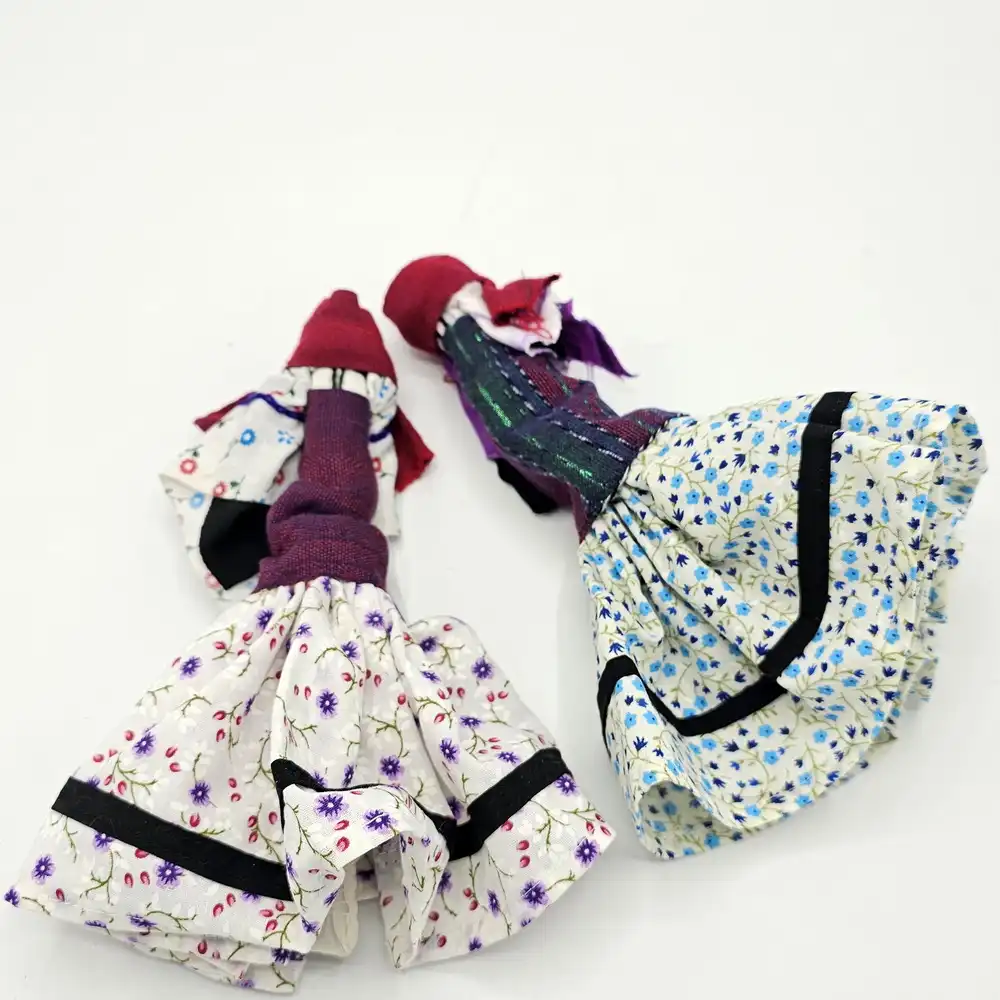
Across many regions of Iran, some traditional dolls are intentionally made without faces. This choice is not accidental; it reflects deep cultural, religious, and symbolic beliefs. In this article, we will explore the different types of faceless dolls in Iran, the reasons behind their design, and the philosophy that makes this tradition unique. By focusing on keywords like faceless dolls Iran and Iranian faceless dolls, we also shed light on an important aspect of Iran’s intangible cultural heritage.

  1. Qorchoq (Turkmen Faceless Doll)

One of the most recognized Iranian faceless dolls is the Turkmen “Qorchoq.” This doll has no facial features at all. Why? According to Turkmen beliefs, perfect creation belongs only to God, and humans should not interfere with divine design. Therefore, the doll is intentionally left incomplete—without a face—as a symbol of respect for divine creation.

Made from wood, fabric, and buttons, the Qorchoq often carries cultural signs of Turkmen identity. For example, a scarf or a ring might symbolize whether the doll represents a married woman.

  1. Aroosk or Aroos (Ghaleh Ghafeh, Golestan)

In the village of Ghaleh Ghafeh, locals make a doll called “Aroosk” or “Aroos.” It is always faceless. The reason lies in the belief that the creator’s personality unconsciously influences the doll’s appearance. By keeping the doll faceless, the identity of the maker remains hidden.

These dolls usually wear three scarves (mandil) on the head, reflecting the colorful clothing of the local women.

  1. Dohtolok (Qeshm Island, Hormozgan)

The Dohtolok, whose name means “little girl” in the local dialect, is a very small faceless doll made from colorful fabrics of the region. The philosophy of facelessness here is the same as the Turkmen view: only God creates complete beings, and human hands should avoid giving full human features.

  1. Bigak Lili (Handijani Doll – Southern Iran)

Found in southern and western provinces such as Khuzestan, Bushehr, Fars, Lorestan, Kerman, and Sistan-Baluchistan, the Bigak Lili is a faceless moving doll. The lack of a face allows children to use their imagination freely, assigning emotions and stories to the doll on their own.


  1. Lilik and Domaik (Mahshahr, Khuzestan)

These faceless dolls resemble a bride and groom. Instead of facial features, a cross-shaped stitch is sewn on their faces. The cross is a symbol of the sun, ancient Mithraism, and blessing. Due to Mahshahr’s ethnic diversity, these dolls are also known by different names such as Lilik, Lo’bat, or Bigak.


  1. “Bi” – Ritual Doll of Dezful

In Dezful, a special faceless doll called “Bi” (meaning “bride” in the local dialect) is part of wedding traditions. It is placed in the bride’s room as decoration and often accompanies the bride in her dowry. Symbolically, the Bi doll is considered a silent companion, sharing the bride’s joys and sorrows. This cultural practice highlights the spiritual role of dolls in Iranian rituals.

The Philosophy Behind Faceless Dolls in Iran

The facelessness of these dolls is rooted in several cultural and spiritual principles:

  1. Respect for Divine Creation – Only God can create perfect beings; leaving dolls faceless acknowledges this belief.
  2. Protecting the Maker’s Identity – A faceless doll prevents the artist’s personality from shaping the doll, keeping it neutral.
  3. Encouraging Imagination – With no fixed expression, children invent their own emotions and stories for the doll.
  4. Symbolic Representation – Some faceless dolls carry cultural symbols, such as the sun-cross in Lilik and Domaik, representing fertility and blessing.
  5. Ritual and Emotional Roles – Dolls like the Bi of Dezful serve as spiritual companions, reflecting the deep emotional and symbolic roles dolls play in Iranian life.


Conclusion

The world of faceless Iranian dolls is a fascinating intersection of spirituality, creativity, and cultural tradition. From Turkmen Qorchoq to the Dezfuli Bi, each doll tells a story not through its face, but through its symbolism, clothing, and cultural meaning.

For collectors, researchers, and enthusiasts, these traditional Persian dolls represent more than toys—they are living pieces of Iran’s intangible heritage. By understanding their philosophy, we learn to see beauty not in the details of a face, but in the depth of tradition behind it.

Leave a Reply

Your email address will not be published. Required fields are marked *